Puppy Training at Home: What to Do First and What Actually Matters
March 28, 2026
Bringing a puppy home is exciting but it can also feel overwhelming with all the advice out there and the pressure to get it right.
Puppy training isn’t about doing everything at once. It’s about focusing on the right things early, so your puppy doesn’t build bad habits.
If you’re wondering when to start training your puppy, the answer is: now. Focus on what matters most in the early weeks, so your puppy builds a strong foundation at home.
What to Focus on First with Puppy Training at Home
Whether you realize it or not, your puppy is learning from the moment they arrive home.
The behaviors they practice early are the ones that stick.
Focus on reinforcing what you like, and preventing what you don’t. The more a behavior is rewarded, the more likely it is to be repeated.
House Training
Accidents will happen. Skip the pee pads, establish a consistent schedule, and set your puppy up to succeed from the start.
With the right routine, house training becomes much more predictable.
Biting and Chewing:
Puppies explore the world with their mouths, and those teeth are sharp especially between 8 weeks and 6 months.
Teach early that human skin isn’t for biting or mouthing. If your puppy grabs your hand, calmly remove yourself and redirect them to an appropriate chew. What feels playful now can become a harder habit to break later.
Crate Training:
When introduced thoughtfully, your puppy can learn to feel safe and relaxed in their crate.
Learn more about crate training your new puppy 👈🏼.
Everyday Manners at Home:
Everyday moments are training opportunities. If your puppy sits before their food bowl, reward it. If they settle calmly next to you, reward that too. Keep treats within reach so it’s easy to reinforce the behaviors you want to see more of.
How to Socialize Your Puppy
Socialization is about helping your puppy feel comfortable with the world around them—new people, places, sounds, objects, and experiences. The goal isn’t exposure alone, but positive experiences.
Why Early Socialization Matters
Around 4 months of age, puppies naturally begin to become more cautious of unfamiliar things. The first few weeks together are an important time to introduce your puppy to new experiences in a thoughtful way.
The more positive exposure your puppy has early on, the more adaptable they’ll be as they grow.
What Socialization Looks Like
Think about what your puppy will experience in everyday life. Visiting a friend’s home, walking past garbage cans, hearing a delivery truck idle, or seeing someone wearing a hat and sunglasses—these are all opportunities for socialization.
Even small, ordinary moments help your puppy learn that the world is safe and predictable.Let Your Puppy Set the Pace:
Even if something seems enjoyable to you, avoid forcing your puppy into interactions they’re unsure about. Pressure can create fear and avoidance, which may show up later as reactivity.
Instead, use food to create positive associations and allow your puppy to choose how they approach new experiences.
The goal isn’t to make your puppy interact with everything—it’s to help them feel safe observing and engaging at their own pace.
Why Handling Your Puppy Matters
While your puppy is young, it’s important to gently introduce handling and light restraint. This helps prepare them for routine care like veterinary visits, grooming, nail trims, and teeth brushing.
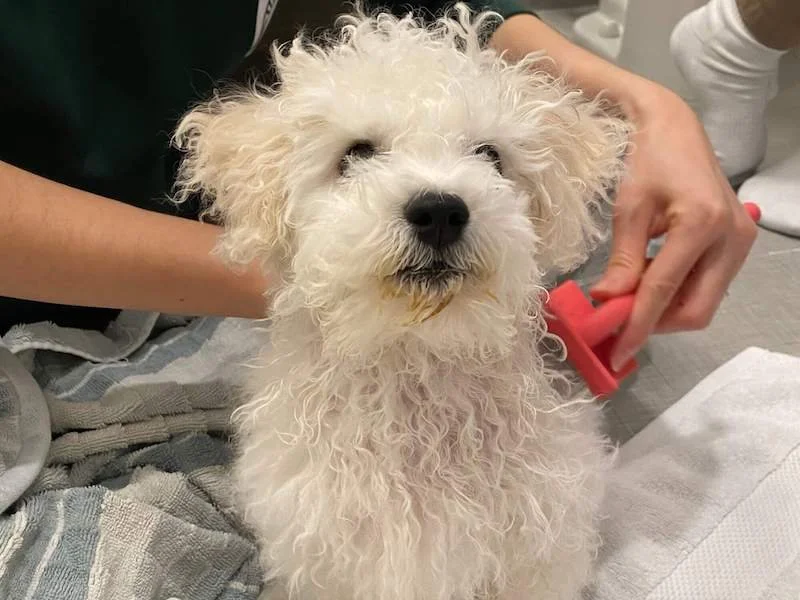
Brushing helps keep Monet’s coat free of mats. Peanut butter was used to create a positive cooperative care experience.
Many dogs struggle with these experiences simply because they weren’t exposed to gentle handling early on especially around sensitive areas like the paws, ears, mouth, and tail.
Start with brief, low-pressure interactions at home. Touch your puppy’s paws, look inside their ears and mouth, gently guide their body into different positions, and introduce tools like a brush.
Pay attention to how your puppy responds, and keep each interaction short and positive. Reward calm participation with a small, tasty treat.
A great time to practice is when your puppy is already relaxed, such as after a play session. Puppies who learn to cooperate in their care feel more comfortable and less stressed during vet and grooming visits.
Setting Up Your Home for Puppy Training
Your puppy has a long list of essentials from day one including food, water, a leash and harness, bowls, toys, and an ID tag.
Puppies get into everything. Think of them like a toddler who has just learned to walk. Creating a safe, contained space using an x-pen or baby gate helps prevent unwanted behaviors before they start.
This space should include chew toys, a comfortable place to rest, and water. Use it anytime you can’t closely supervise your puppy.
Offer a variety of chew toys so your puppy can explore what they prefer. Some enjoy soft toys, while others need more durable options. Rotating toys regularly helps keep them interesting and makes it less likely your puppy will go searching for your shoes or socks instead.
What Your Puppy Learns and What They Need From You
Beyond supplies and setup, your puppy needs to feel safe and supported as they learn. And because puppies don’t yet know what’s expected of them, you’ll need to teach them.
Clarity
From the moment your puppy comes home, they’re learning what works. Decide early what behaviors you want to allow. Will your puppy be on the couch? Sleep in your bed? Greet guests calmly?
Clear expectations make it easier for your puppy to understand how to succeed.Consistency
Puppies learn through repetition. When expectations change from day to day or person to person it creates confusion.
Keep rules consistent so your puppy can learn what’s expected of them with confidence.Practice and Patience
Learning takes time. Short, repeated practice helps skills stick. When everyone in the household uses the same cues progress becomes much smoother.
Positive Reinforcement
Puppies learn best through positive experiences (AVSAB). Rewarding the behaviors you want to see encourages them to happen more often.
Conclusion
The early weeks with your puppy set the tone for everything that follows.
By focusing on the right things from the start, you can prevent unwanted habits and build a foundation your puppy can grow into.
✌🏽❤️🐶
Looking for more support?
🐶 Free Puppy Training Guide
Start with practical, step-by-step guidance you can use at home.
🏡 In-Home Puppy Training
Personalized support to help you raise a calm, well-adjusted puppy with confidence.