updated: March 27, 2026
Does your dog finish their meal in seconds, or seem completely uninterested in what’s in their bowl?
Whether you live with a speed eater or a picky eater, something is missing.
If you think of mealtime as just sustenance, you’re overlooking an easy way to make it more engaging and more interesting for your dog.
Why Dogs Naturally Want to Work for Their Food
Dogs naturally sniff, forage, chew, lick, dig, and play.
One of the easiest ways to give your dog opportunities to use these behaviors and support their overall well-being is through food.
What is Contrafreeloading?
Animals often prefer to work for their food even when the same food is freely available.
The term for this is contrafreeloading.
You’ve probably experienced this yourself. Putting effort into something makes it more satisfying than when it’s handed to you.
Actionable Ways to Start Feeding for Enrichment
Once you start thinking about mealtime differently, it becomes an easy way to add enrichment to your dog’s day.
And it doesn’t have to be complicated.
Method 1: Embrace the Hunt with Scatter Feeding

London, Nutmeg, and Tiger forage for scattered food in the grass.
Start simple: Scatter kibble or treats across the floor inside your home
Signal the game’s start: Say “Find It!” or “Search” to encourage your dog to begin sniffing
Increase difficulty: Spread the game into a larger area. Try the entire first floor, multiple rooms, or take it outside where new scents increase the challenge.
Manage excitement: If your dog eats as you scatter, temporarily move them to another room while you prepare.
Scatterfeeding is a favorite activity in my household! I will also use scatterfeeding before teaching an overly exhubertant dog a lesson in loose leash walking.
Method 2: Mental Workouts with Puzzle Feeders
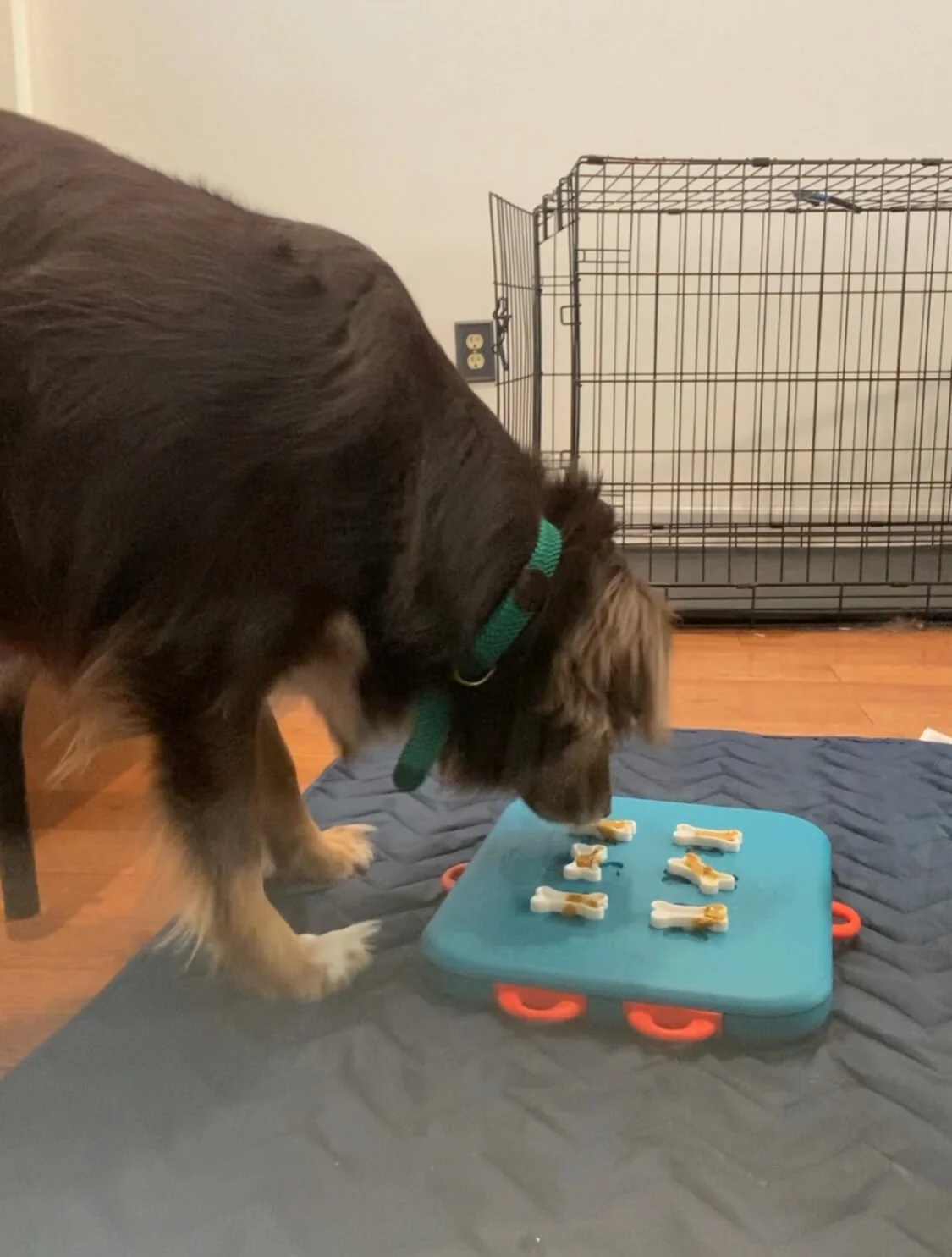
Peanut butter was added to the puzzle to help Charles get started.
Commercial Puzzles: Look for durable food-dispensing toys that allow your dog to work for their food (e.g., Outward Hound or West Paw).
Low-Impact Option: Use snuffle mats for dogs with mobility issues or those new to enrichment games.
DIY Solution: Place kibble in a cardboard box with crumpled paper and let your dog forage.
Important: Enrichment should never be frustrating! If your dog becomes stressed, make the task easier or lend a helping hand.
Making Mealtime More Meaningful
Small shifts like scatter feeding or food-dispensing toys can make mealtime more interesting and influence your dog’s behavior.
If your dog struggles with restlessness, focus, or settling at home, enrichment is often one piece of a much bigger picture.
✌🏽❤️🐶
Frequently Asked Questions About Feeding for Enrichment
-
Ideally, this becomes part of your dog’s daily routine, not just something you do occasionally.
It doesn’t have to be every meal, but frequent opportunities to work for food can make a meaningful difference.
-
This means the puzzle is too difficult. Enrichment should be engaging, not frustrating.
If your dog gives up, make it easier by helping them access the food or switching to a simpler option. Building success early helps your dog stay interested.