Potty Training a Puppy: A Plan for Fewer Accidents
updated: April 6, 2026
If you feel like your puppy is having accidents the second you turn your back, you’re not alone.
Potty training isn’t confusing because puppies are stubborn or “not getting it.” It’s usually a breakdown in timing, supervision, and structure.
The good news is you don’t need complicated methods or endless advice. You need a clear plan that you can put into action right now.
These are the same guidelines I walk through with clients during private consultations. If you follow them consistently, your puppy will start to understand where and when to go.
The Two Rules That Make Potty Training Work
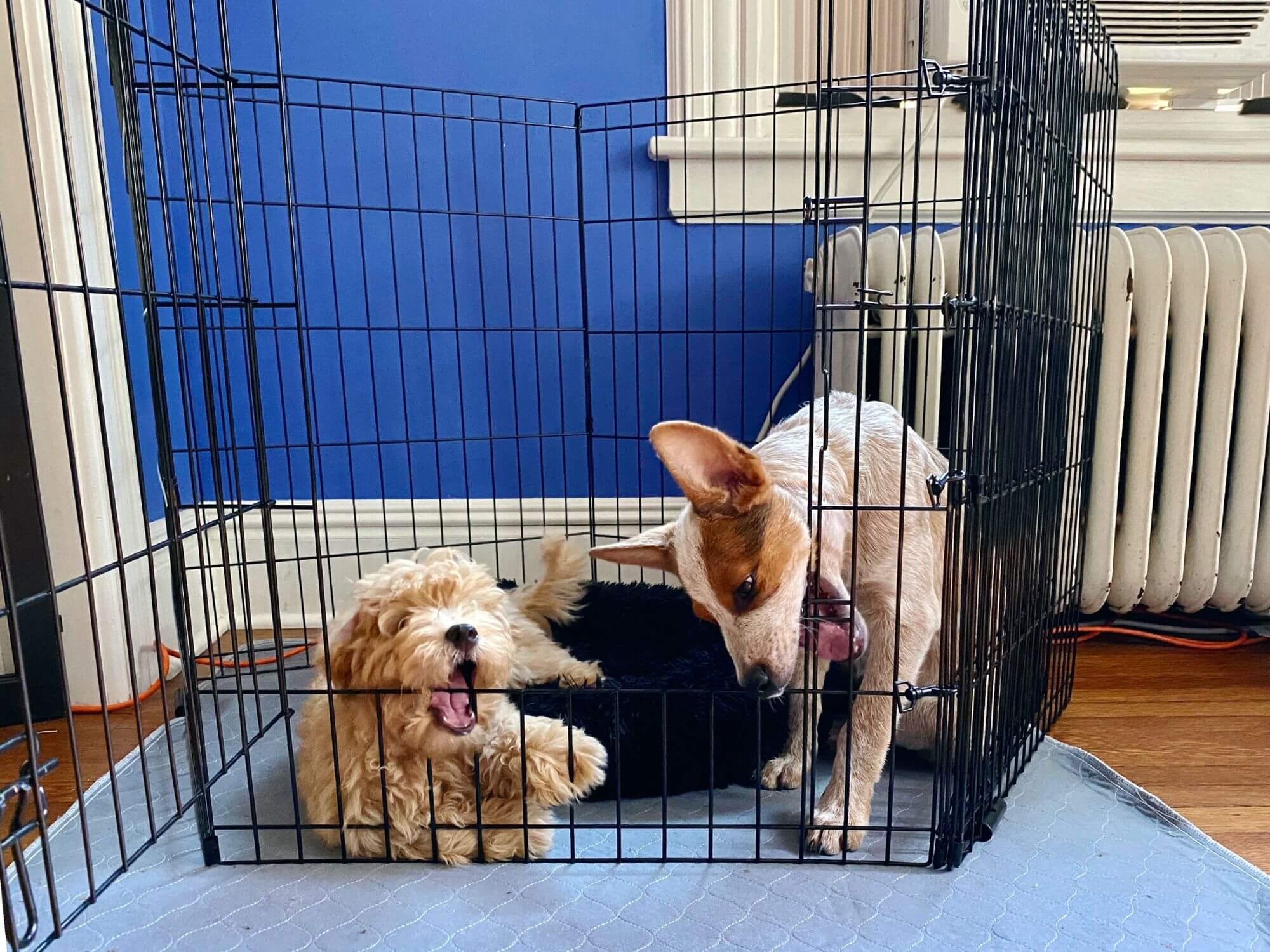
These puppies aren’t potty trained yet, so they’re safely contained in a wire enclosure when they can’t be actively supervised
Rule #1: Don’t leave your puppy unsupervised
Rule #2: Reward your puppy for going outside, every single time
That’s it. Everything else builds from these two rules.
One of the most common mistakes is giving puppies too much freedom too soon. If you can’t actively watch your puppy, they should be in a safe, contained area.
While it’s exciting to see your puppy get it right, you don’t want to interrupt them while they’re going.
Wait until your puppy is completely finished before delivering the treat.
Some very smart puppies will watch for you to reach for the treat. The second you move, they stop what they’re doing to come collect their reward.
Half empty tanks lead to accidents indoors.
Give it a second. Let them finish.
A Simple Puppy Potty Training Schedule
Puppies don’t have the ability to “hold it” for long periods. A general guideline is your puppy can hold it for about one hour longer than their age in months.
But daily life matters more than math. Most accidents happen because a puppy needed to go and didn’t get the chance.
Take your puppy out:
First thing in the morning
After eating
After play sessions
After waking up from naps
After coming out of their crate
Before bed
Also watch for signals:
Sniffing the ground
Circling
Suddenly wandering off
Sitting and staring at you
If you’re busy or distracted, set a timer. Missing the window is one of the fastest ways to slow progress.
Once you understand the signals, the next step is cleaning up the small habits that tend to get in the way.
Why Accidents Keep Happening
Accidents aren’t your puppy being bad. They’re information.
Most potty-training accidents come down to these reasons:
Too much freedom
Not enough supervision
Missed timing
Expecting your puppy to hold it longer than they can
If your puppy is having accidents, go back to the two rules. Almost every issue comes back to one of them.
Potty training works best when you stay one step ahead. When accidents happen, it usually means your puppy didn’t get the opportunity to go in time.
Two Common Mistakes That Slow Progress
Even with a good routine, you may be making make these common pet guardian errors.
1. Staying outside too long waiting for them to go
If your puppy doesn’t go within about 5 minutes, bring them back inside.
Then try again in 5–10 minutes.
Standing outside for long stretches often turns into a distraction instead of a potty break. Short, focused trips work better.
2. Limiting water to “prevent accidents”
It might seem like restricting water would help, but this strategy backfires.
When water feels limited, puppies tend to overdrink when they have access to it. That can make potty training harder, not easier.
Keep water available and focus on timing instead.
What To Do When Your Puppy Has an Accident
Skip punishment completely.
Your puppy isn’t connecting your reaction to what they did minutes ago. Yelling, scolding, or physical corrections will only create confusion and damage your relationship.
Instead:
Clean the area thoroughly with an enzymatic cleaner
Ask yourself what led to the accident
Adjust your timing or supervision
If you catch your puppy in the act:
Interrupt gently
Bring them outside
Reward if they finish outside
That’s it. Nothing needs to be said.
Setting Your Puppy Up for Success at Home
A few things that make a big difference:
Use an enzymatic cleaner to fully remove odors
Avoid cleaners with ammonia (they can encourage repeat accidents)
Use a contained area when you can’t supervise
Skip disposable pee pads if your goal is outdoor training
Disposable pads are designed to attract your puppy to pee indoors. That works against what you’re trying to teach.
How to Handle Setbacks Without Getting Frustrated
It’s easy to focus on accidents. But progress is easier to see when you track success.
For a few weeks, keep track of:
Successful potty trips
Accidents
You’ll likely find your puppy is doing better than it feels in the moment. Surely, you will feel better about a 85% success rates, than 8 accidents this week!
Don’t compare your puppy’s progress to another dog’s timeline.
Every puppy learns at a different pace and faster doesn’t mean better. A puppy who is fully house-trained at 5 months isn’t “smarter” than one who takes longer to figure it out.
What matters is consistency, not speed.
Bringing It All Together
How quickly your puppy becomes potty trained is hard to predict.
But with clear timing, supervision, reinforcement, and a little bit of maturity, things start to click.
If it feels like your puppy is having accidents out of nowhere, it’s usually not random. It’s a missed opportunity.
And once you start to see those patterns, it becomes much easier to stay one step ahead.
If you want help putting that structure in place from the start, that’s exactly what I do through my in-home puppy training programs.
✌🏽❤️🐶
Frequently Asked Questions About Potty Training a Puppy
-
There’s no exact timeline. Some puppies start to understand within a few weeks, while others take several months. Progress depends on consistency, supervision, and your puppy’s development.
-
A general guideline is your puppy can hold it for about one hour longer than their age in months. However, that guideline does not apply after eating, playing, waking up, or coming out of their crate.
-
This usually comes down to timing or incomplete potty breaks.
Some puppies get distracted outside or stop mid-way in anticipation of the reward. That’s why it’s important to wait until they’re finished before reinforcing.
-
If your goal is for your puppy to go outside, pee pads can make things more confusing. Disposable pee pads are designed to attract your puppy to pee indoors. Skipping them is clearer communication which makes for faster progress.
-
No. Restricting water can backfire and lead to overdrinking when water is available. It’s more effective to keep water accessible and focus on timing and supervision.
-
Interrupt gently and bring your puppy outside right away. If they finish outside, reward them. If not, clean the area thoroughly and adjust your timing moving forward.
Continue Learning
If you're looking for more guidance as you raise your puppy, here are a few next steps:
🐶 Free Puppy Training Guide
A simple starting point to help you build routines, prevent common issues, and set your puppy up for success at home.
🏡 In-Home Puppy Training
Get hands-on support with your puppy’s routine, behavior, and daily structure through personalized, in-home training.