updated: April 3, 2026
Your dog is noticing things you’re not.
They hear sounds before you do, pick up scents you’ll never detect, and notice movement you might completely miss.
So, when your dog stops, stares, or reacts and you’re not sure why, it’s easy to assume it’s nothing.
But it’s rarely nothing.
While we share the same five senses, the way dogs experience the world is very different from our own—and understanding that can shift how you see your dog’s behavior.
Why Your Dog’s Sense of Smell Matters
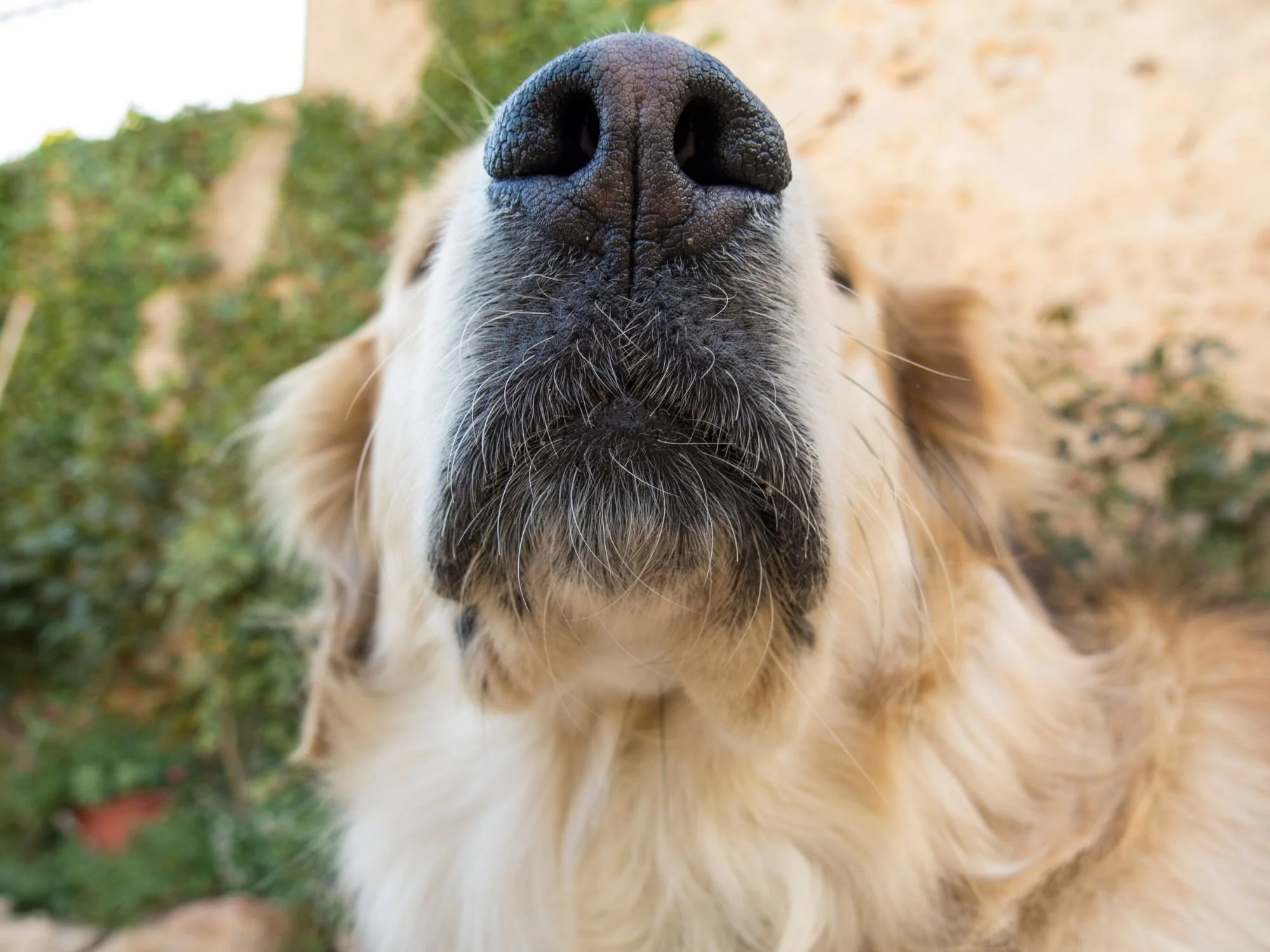
While you’re noticing the weather or checking your phone, your dog has their nose pressed to the ground, gathering information.
Your dog’s nose contains hundreds of millions of scent receptors, making it up to 40 times more powerful than yours. They’re not just smelling what’s currently there—they’re picking up layers of information… pee mail, if you will.
If the scent on the ground is from another dog, your dog can tell that dog’s gender, reproductive status, mating availability, and even whether they’ve crossed paths before.
For your dog, sniffing isn’t a hobby. It’s how they experience the world.
Sniffing also plays an important role in their well-being. Long, slow sniffing can help lower a dog’s heart rate, like how taking a deep breath helps us settle.
I recommend taking your dog on long, slow “sniffy” walks because of the mental and heart healthy benefits.
So, when your dog pauses to investigate the same patch of grass longer than you’d like, there’s more going on than meets the eye.
Why Your Dog Hears Things You Don’t
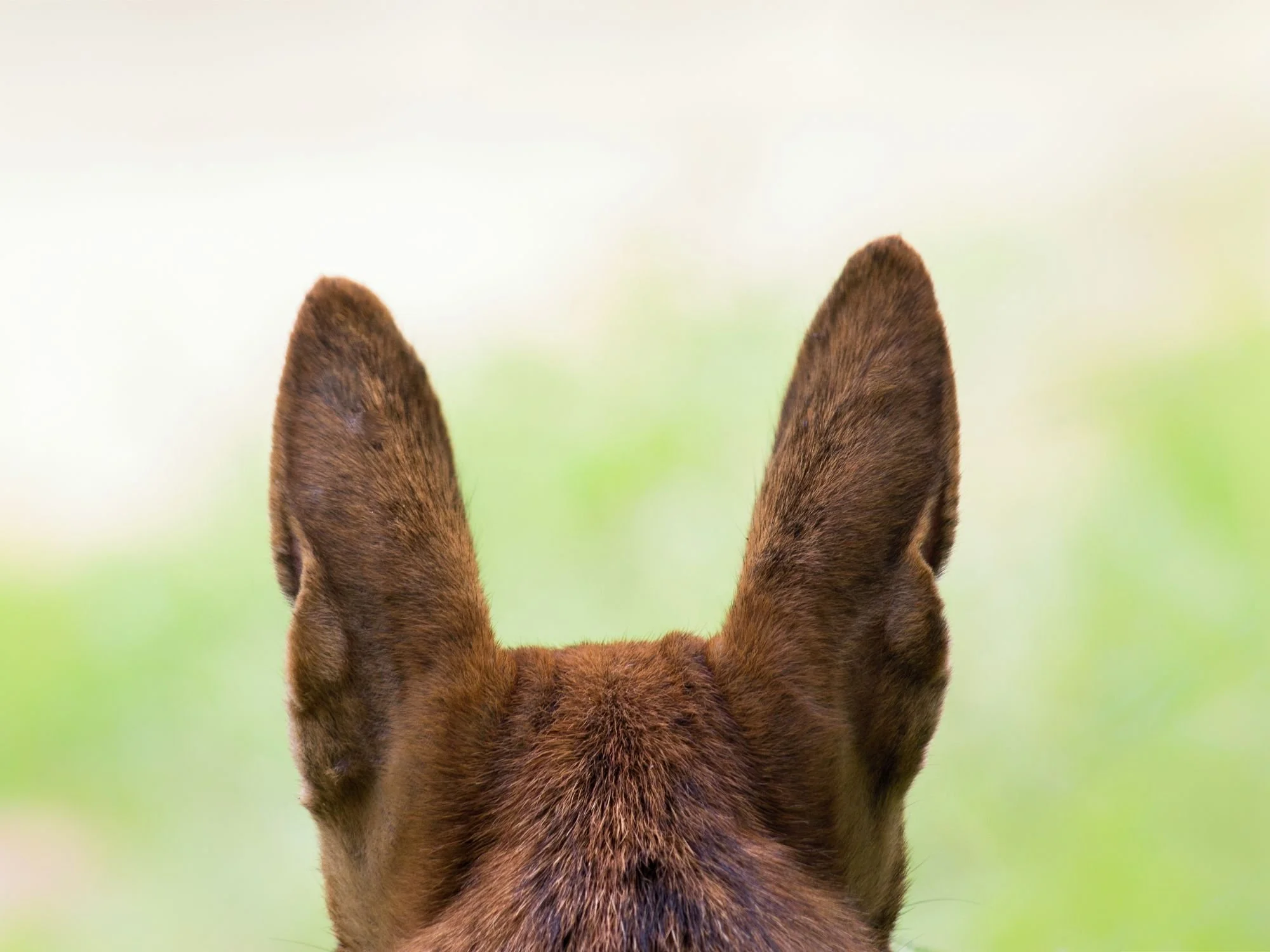
When your dog barks and you’re convinced it’s at nothing, it’s worth reconsidering.
Your dog may be hearing something you can’t.
Dogs can detect a wider range of sound and from much farther away. As behaviorist Melissa McCue-McGrath puts it, dogs can hear at 75 feet what we hear at 20 feet, about four times the distance.
So while it might seem like an overreaction, your dog could be alerting to something very real, even though outside your range of perception.
I’ve lived with dogs with both floppy and erect ears, and their sensitivity to sound is noticeable. Its almost as if those erect ears serve as built-in antenna, something many dog guardians recognize right away.
What Your Dog Sees: Color, Movement and Contrast
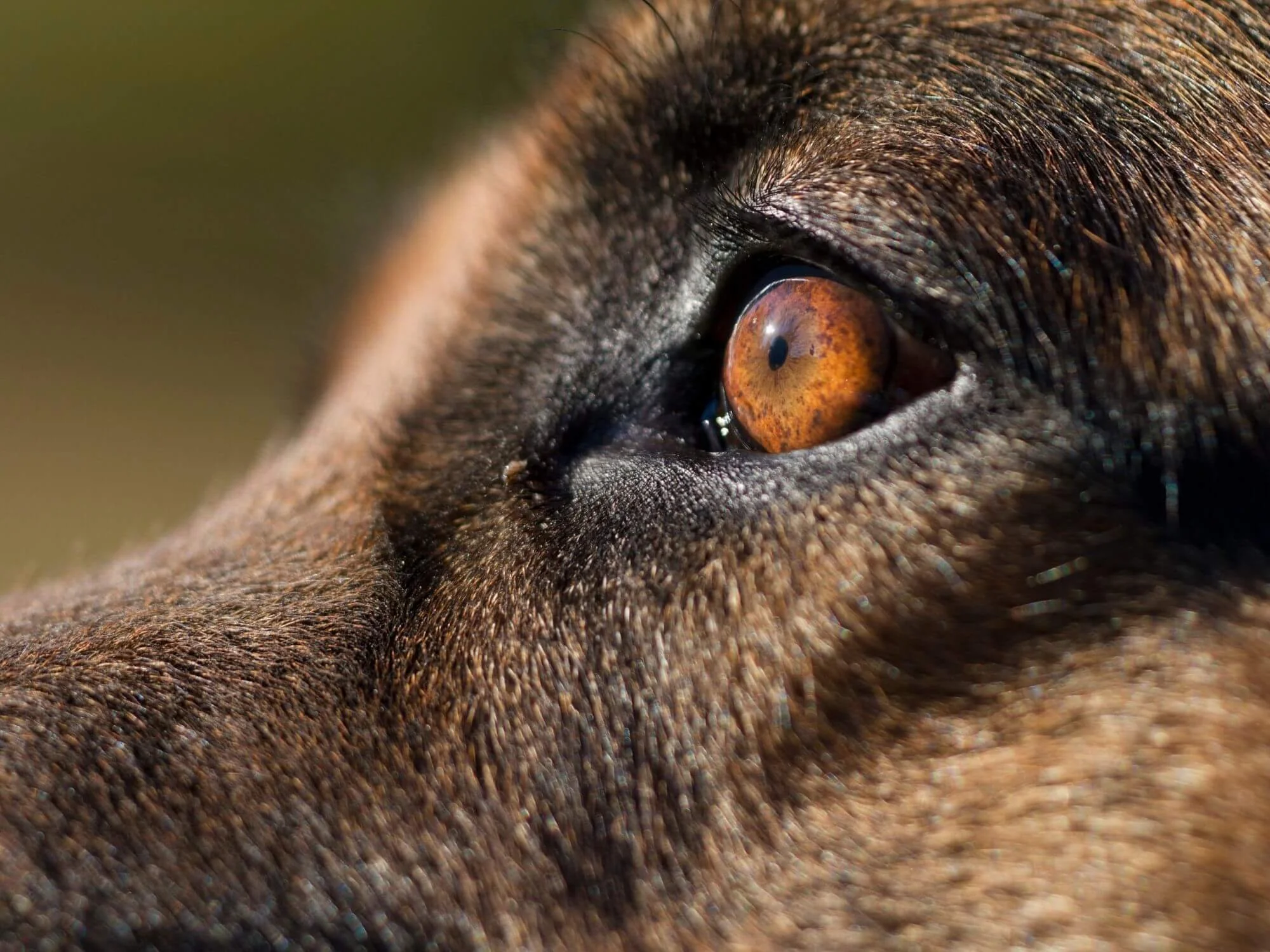
When it comes to vision, your dog isn’t seeing the same picture you are.
Dogs see fewer colors than we do; blue, yellow, and shades of gray because they have fewer cones in their eyes.
That doesn’t mean color is irrelevant. Dogs can learn to distinguish between the colors they do see—for example, telling the difference between blue and yellow objects.
What they lack in color detail, they make up for in function. Dogs have more rods in their eyes, which gives them an advantage when it comes to peripheral vision, seeing in low light, and detecting movement.
That’s why your dog can spot something moving long before you do or track a tossed treat with impressive accuracy.
I see this all the time. My dog Ginger never misses a catch and is always quick to notice the smallest movement, especially when it involves a critter.
How Your Dog Decides What’s Worth Eating

Most dogs aren’t exactly fussy. They tend to approach food with a clear “get in my belly” attitude.
Dogs have far fewer taste buds than we do (about 1,700 compared to our 9,000+), so taste plays a smaller role in how they experience food.
Instead, dogs rely heavily on their sense of smell to decide whether something is worth eating.
That’s why stinky meat treats are recommended for training. They’re easier for your dog to notice and more likely to hold their interest.
Interestingly, dogs can detect differences in water. While living in Tampa, my dogs refused tap water but happily drank distilled water and took every opportunity to drink from puddles instead.
How Your Dog Uses Whiskers to Navigate the World

A dog’s sense of touch doesn’t work the way ours does. They’re not using their paws to explore the world the way we use our hands.
Instead, dogs rely heavily on their whiskers to navigate and understand their surroundings.
Whiskers are incredibly sensitive. They can detect subtle changes in airflow, helping dogs understand the size, shape, and movement of objects nearby. This creates an added layer of awareness that helps your dog notice what’s around them, even before they see or touch it; like an early warning system.
Conclusion
While we share the same five senses as our dogs, the way they experience the world is very different from our own.
Recognizing these differences gives us a new perspective and a better understanding of our dog’s preferences and behavior.✌🏽❤️🐶
Frequently Asked Questions About Dog Senses
-
Dogs can see color. They have two color cones in their eyes, allowing them to perceive blue, yellow, and shades of gray. They don’t see the full spectrum of color the way humans do.
-
Long, slow sniffing can help lower a dog’s heart rate, like how taking a deep breath helps us settle. While this is especially helpful for reactive dogs, all dogs benefit from having time to slow down and sniff during walks.
-
No. Whiskers play an important role in how dogs understand their environment. They are highly sensitive and help detect subtle changes in airflow, giving dogs information about nearby objects without needing to touch them.