How to Keep Your Dog Calm After Surgery
updated: March 27, 2026
After surgery, many dogs bounce back faster than expected. The grogginess fades, and suddenly they’re ready to move again — even when their body isn’t.
With running, playing, and normal routines off-limits, keeping your dog calm while they recover can feel like a challenge.
The goal during this time isn’t just rest — it’s helping your dog stay comfortable, mentally engaged, and supported without increasing stress or physical strain.
Below are practical ways to manage your dog’s energy and support a smoother recovery at home.
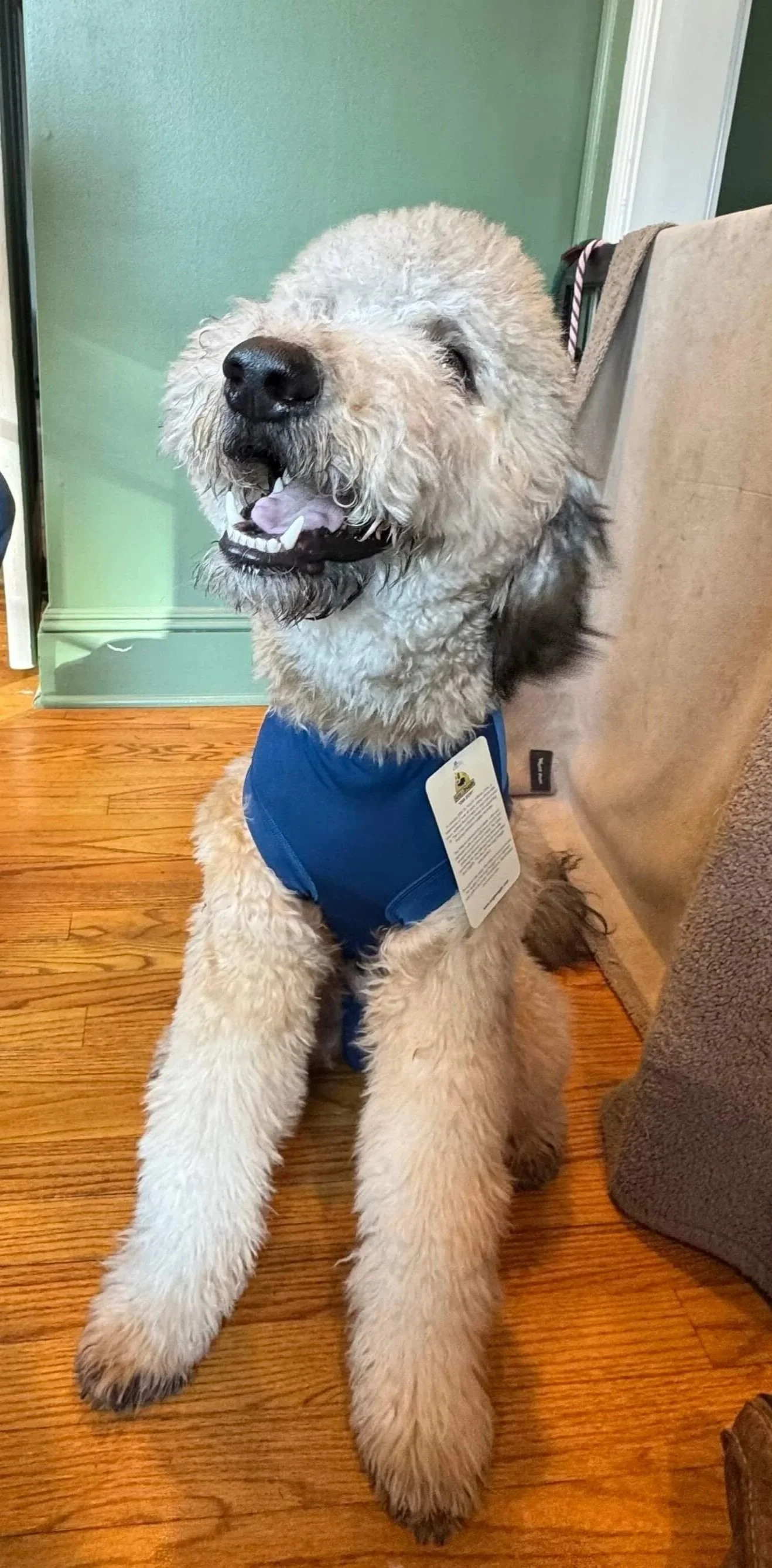
Wolfie in his recovery suit. This alternative helped him move comfortably and stay calm during recovery.
Trainer’s Insight: Wolfie’s Story
Recovery isn’t just about limiting movement — comfort plays a huge role in helping dogs settle.
When I fostered Wolfie, we initially used a soft cone, but he still struggled with depth perception and overall comfort.
Switching to a surgery suit made a noticeable difference. He was more relaxed, could eat more easily, and daily routines like potty breaks felt less stressful.
Experiences like this are a good reminder that when dogs are physically more comfortable, it’s often easier for them to stay calm during recovery.
6 Ways to Keep Your Dog Calm and Safe After Surgery
Swap the Plastic Cone for a Surgery Suit
Opt for a snug surgery suit or a flexible soft cone to reduce anxiety, fear, and stress. These alternatives allow for better comfort and movement, helping your dog rest without the frustration of a rigid plastic barrier.
Use Chews and Toys That Encourage Calm Behavior
A new toy can become your best ally in helping to occupy your dog after surgery. Durable chew toys like elk antlers, buffalo horns, or marrow bones provide long-lasting entertainment. Chewing is a natural decompressor and stress reliever, plus these items can’t bounce all over the floor.
Pro Tip: Rotate your dog’s toys every day to keep their interest piqued. Like kids, dogs get bored of the same routine items, and this smart strategy ensures every chew session feels like a brand-new adventure.
Use Scent-Based Enrichment to Reduce Restlessness
Since physical exercise is restricted, let your dog work their brain. Scent games allow them to use their natural instincts and tire themselves out mentally without requiring physical effort.
Food Puzzles: Give your dog an opportunity to work for their food. Not only will meal and snack times take longer, but your dog will feel even more satiated.
Sniffy Walks: Take your pup for a slow walk allowing them to choose the path. Give them ample time to stop and sniff every hydrant, patch of grass, or lamp post for as long as they want.
DIY Scent Work: Hide treats around the room and let your dog sniff them out.
Reinforce Calm, Stationary Behaviors
Recovery time is a great opportunity to fine-tune your dog’s manners by teaching or continuing to practice the “stay” or “place” cues. These cues are useful at home during Zoom meetings, or while at a brewery or a restaurant where your dog is expected to lay down at your feet and “stay”.
Rather than lure your dog into the down position, simply wait for them to do it on their own. As soon as your dog is in the down position, say the cue “stay” or “place”, and then reward them with a tasty treat. Once your dog feeling is up to a more difficult task, teach them to hold the down position while you turn your back, walk away, toss a ball, and increase the time between treats.
Support Comfort Through Cooperative Care
Grooming and veterinary visits can be a challenge for some dogs. While your dog is resting and recovering, work on these husbandry skills.
Body Handling: Get your pet comfortable with paw, ear, tail and mouth touching. Practice to make veterinary exams not so scary.
Chin Rest: This cooperative care exercise teaches the dog to rest their chin in the palm of your hand. Useful for your pet to consent to whatever comes next i.e. chin in palm, ready for the shot or chin in palm, ready for brushing.
Massage Time: Gentle massage is not only relaxing but it’s also a great way to check on their wound and exchange oxytocin, the love hormone.
Teach a Low-Energy Trick
If there’s one silver lining to your dog’s downtime, it’s the chance to master a fun party trick. Since they are likely already lying down on the couch or bed, follow these steps:
Start with your dog in the down position. Super convenient as they are probably already laying down on the couch, in their bed or in your bed.
Hold a treat to their nose then move your hand over to the side so they need to roll to get it
Say ‘yes’ or click, then release the treat and repeat this step many times.
Say ‘dead’, and make a finger gun signal, then follow steps 2 and 3 and repeat.
Make the finger gun hand signal then say, ‘bang your dead’, and wait for your dog to drop to the floor. When they pop up, give them a well-deserved treat for their performance.
Supporting a Calm and Comfortable Recovery
With their usual activities on hold, your dog will look to you for comfort, support and entertainment. Bringing in new toys, leveraging enrichment, and practicing helpful life skills are all great ways to make the most of your dog’s recovery period. Remember to keep sessions short and use super stinky rewards to encourage learning. Mental exercise is an essential key to keeping your pet happy and it is just what this trainer ordered.
Have you tried any of these activities with your dog? Share your experience or your dog’s newfound skills in the comments below. Happy healing!
✌🏽❤️🐶
Frequently Asked Questions About Dog Surgery Recovery
-
Mental enrichment like food puzzles, scent work, and trick training can tire your dog safely without physical strain.
-
Training stationary cues like ‘place’ or ‘playing dead’ and providing scent-based enrichment provides mental stimulation while supporting safe movement limits.s.
Continue Learning
When activity is limited, small choices can make a big difference. Learn how choice-based enrichment helps reduce stress and support calmer behavior at home.