Why Dogs Chase: How to Stop Chasing Cats, Cars, and More
April 29, 2026
Chasing movement isn’t just fun for your dog. It’s a natural behavior.
From a running squirrel to a passing car, movement grabs their attention instantly. For many dogs, the urge to chase is something they’re wired to do.
The problem isn’t the instinct itself.
Chasing becomes a problem when it’s obsessive, creates safety risks, or disrupts life with another household pet.
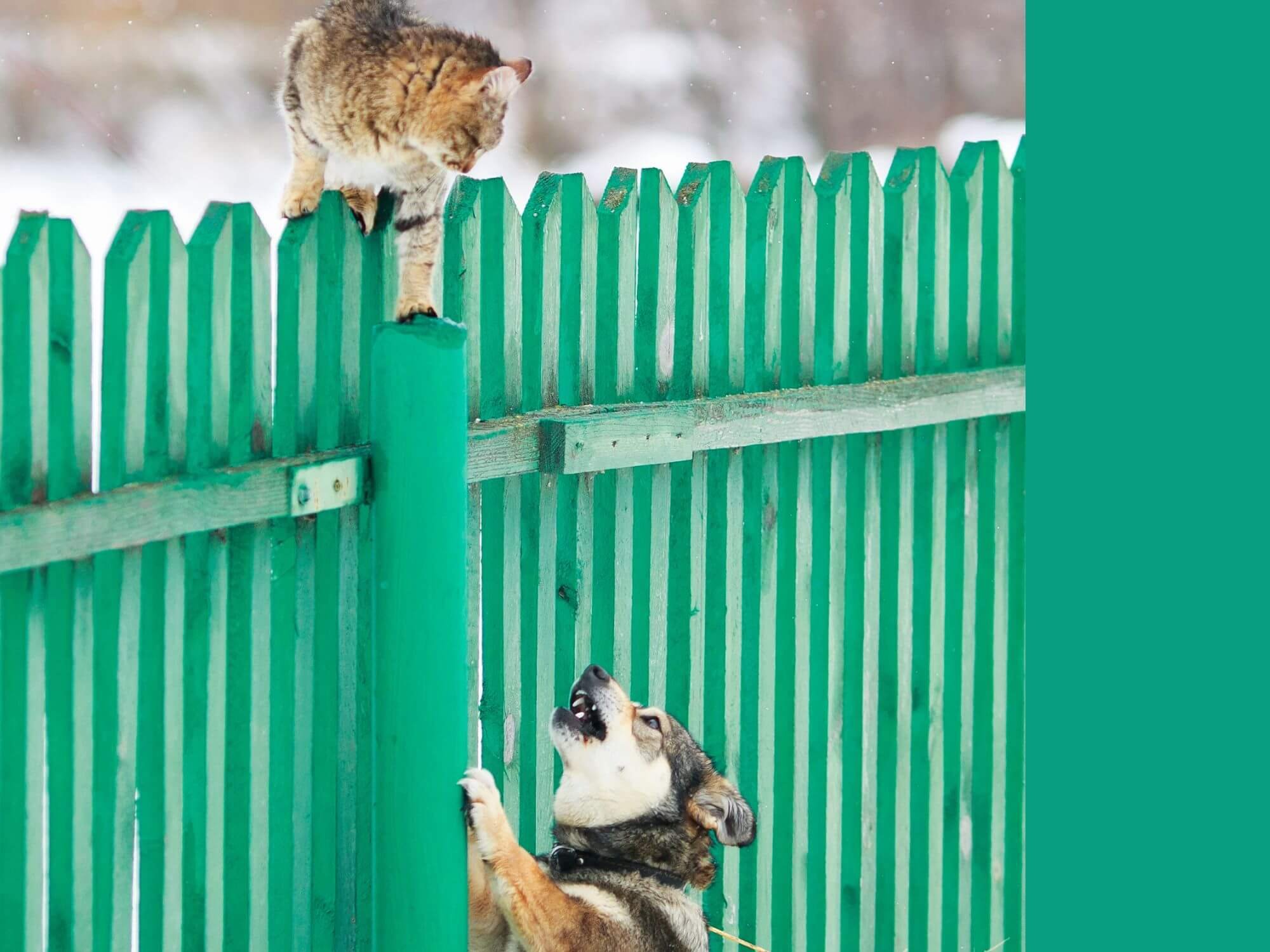
A common example of chasing behavior—what may feel like play to one dog can be stressful or unsafe for another animal.
Why Dogs Chase
Long before domestication, dogs needed to hunt for their food. Chasing is part of a dog’s natural predatory sequence. It’s the instinct to notice, pursue, and interact with movement.
Movement is what makes chasing exciting. It’s also what triggers it.
Things like:
• a cat entering the room
• wildlife running through the backyard
• a car driving by
• even the vacuum moving toward them
For some dogs, chasing is about excitement.
For others, it’s tied to tension or overstimulation.
Dogs don’t just chase to hunt. They chase because movement itself is rewarding.
Whether it’s a ball, a person running, or a passing car, the act of chasing is fun.

Dogs don’t just chase prey. Movement itself is rewarding, which is why games like fetch can be so engaging.
When Chasing Becomes a Problem
Chasing becomes a concern when it impacts safety.
That might look like:
rushing the family cat
lunging toward cars or cyclists
fixating on movement during walks
struggling to disengage once something catches their attention
In these moments, the goal isn’t just to put an end to chasing. It’s to help your dog stay calm in the presence of movement.
Why Herding Dogs Struggle More
Some dogs are simply more sensitive to movement than others.
Herding breeds were selected to notice and control movement, so it makes sense that they’re more likely to fixate on it.
Their reaction has nothing to do with disobedience. It’s a natural behavior response, much like how people are drawn toward things that feel important or meaningful to them.
How to Provide an Outlet for Chasing Behavior
Dogs don’t stop chasing because the instinct disappears.
They improve when you provide an appropriate outlet for that instinct.
Structured outlets can help, such as:
flirt pole games with clear start and stop cues
controlled fetch with built-in pauses
Fast CAT, a dog sport where dogs chase a lure over a set distance
These activities provide a safe outlet for your dog’s instincts, which can make things like walks around the neighborhood feel more manageable and less reactive.
Additional enrichment activities can also help give your dog appropriate ways to engage with their instincts throughout the day. For example giving your dog more choice in how they interact with their environment can also support calmer behavior over time.
A Note on Games Like Fetch
Fetch can be fun, but for dogs who already struggle with chasing, it can sometimes increase intensity around movement.
That doesn’t mean you need to eliminate the game entirely.
Instead, change how the game is played. For example:
• shorter sessions, like two 5-minute sessions instead of 30 minutes of continuous play
• pauses between throws
• reinforcing calm behavior before the game continues, for example asking your dog to sit or lie down between throws
This helps shift the pattern from mindless repetition to more thoughtful engagement.
How to Reduce and Manage Chasing Behavior
Stopping chasing isn’t about correcting your dog in the moment.
It’s about building skills that show up before the chase begins.
Focus on three areas:
1. Awareness and Distance
Start far enough away from the trigger that your dog can notice it without reacting.
This might mean:
watching a bike from across the street
seeing the cat from behind a gate
observing movement without immediate access
Distance creates the space needed for learning.
2. Reinforcing Disengagement
When your dog notices movement and chooses to look away, pause, or check in—that’s the moment to reinforce.
These small choices are what eventually replace the urge to chase.
You’re not asking for perfection.
You’re building a pattern.
3. Gradual Exposure
As your dog becomes more comfortable, you can slowly decrease distance or increase movement.
The goal isn’t to rush the process.
It’s to keep your dog successful at each step.
Over time, this builds the ability to stay calm even when things are moving.

The dog on the right previously chased the smaller dog in the home. With the right structure and guidance, she learned to stay calm and coexist comfortably.
When to Get Support
If chasing feels intense or unsafe, it’s often a sign your dog needs more guidance.
This is especially true when:
safety is a concern
another pet is involved
your dog struggles to settle after stimulation
This type of behavior is best addressed with a structured plan that accounts for your dog, your environment, and the situations where it’s happening. This is where more personalized support can make a meaningful difference.
What This Looks Like at Home
Chasing is normal. Living with constant tension around movement is not.
With the right structure, your dog can learn to:
remain calm when the cat enters the room
walk past moving triggers without lunging
disengage from activity and settle more easily
Not because the instinct is gone, but because they’ve learned how to handle it.
✌🏽❤️🐶
Frequently Asked Questions About Dog Chasing
-
Movement triggers the instinct to pursue. For some dogs, it’s excitement. For others, it’s overstimulation or frustration.
-
The instinct doesn’t disappear, but with training, dogs can learn to manage it and respond differently.
-
Chasing on its own isn’t considered reactivity. When it’s paired with barking or lunging, it can be.
Some dogs chase because it’s fun. Others chase because something feels overwhelming.
Rather than focusing on a label, focus on why your dog is responding this way and whether the behavior is creating risk.
Need Support with Chasing Behavior?
If chasing feels intense, unpredictable, or unsafe, it’s often a sign your dog needs more structured support—not just more exercise.
This is especially true when:
your dog is chasing cars, bikes, or wildlife
another pet in the home is being targeted
your dog struggles to disengage once they’re focused
everyday activities like walks feel stressful or hard to manage
In-home training allows you to work through these patterns in the environment where it happens, with a plan tailored to your dog, your home, and your routines.