Crate vs Playpen for Puppies: What Actually Works at Home
April 10, 2026
Most new puppy guardians are told they need a crate.
Then someone else says a playpen works better.
And if you haven’t had a puppy in a long time, or ever, suddenly you’re wondering what your puppy will prefer, what fits your home, and what will make life easier.
The reality is, it’s not one or the other.
Most puppies benefit from both: a crate for rest and a playpen for daytime management.
Crate or Playpen: How to Choose the Right Setup
I recommend having both a crate and a playpen because they solve different problems throughout the day.
The crate supports rest and downtime
The playpen allows for safe movement when you can’t fully supervise
When each is used for its intended purpose, most puppies settle more easily, and the day feels more manageable.
When a Crate is Most Useful
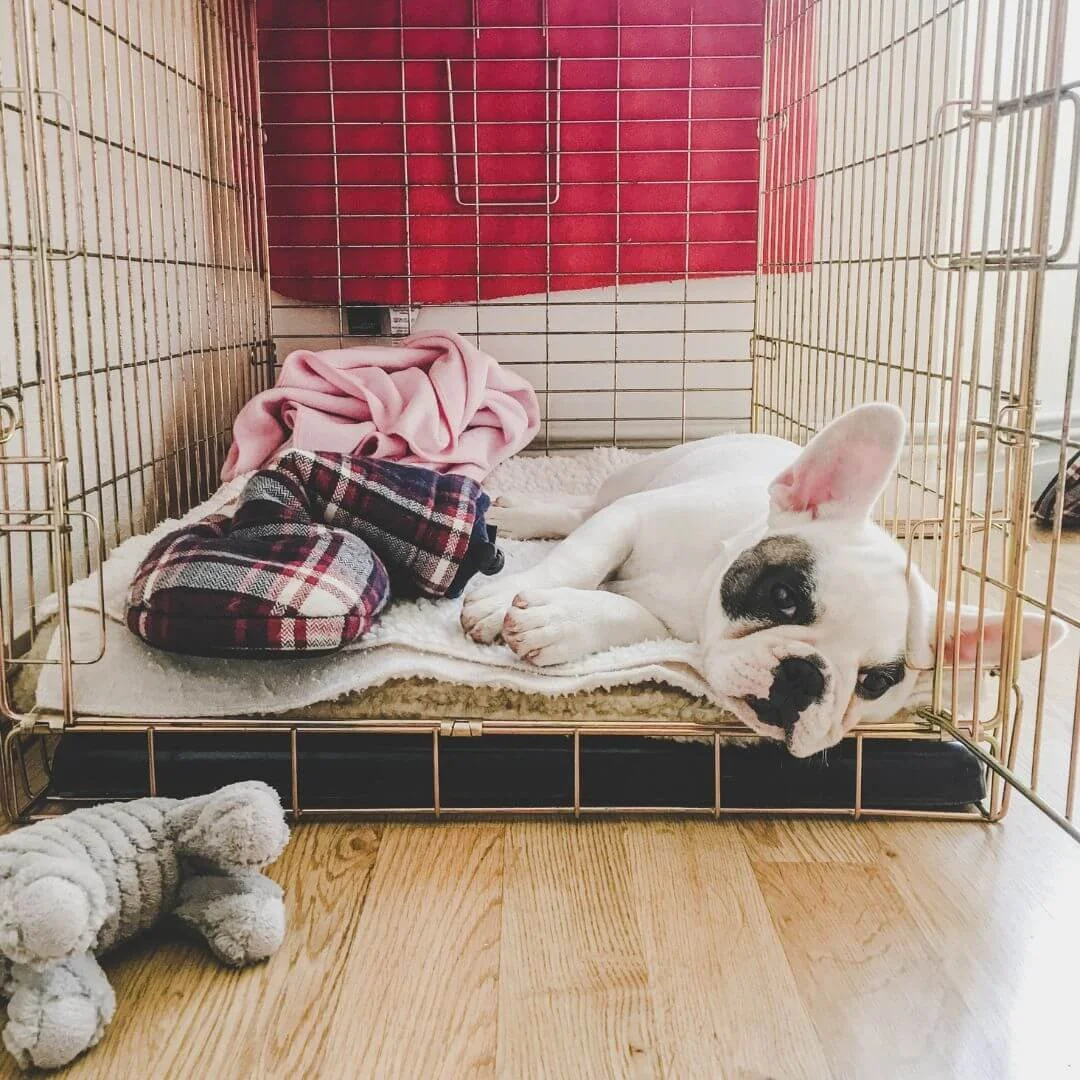
A puppy resting comfortably in their crate with soft toys and a blanket.
The crate works best when your puppy needs a quieter, lower-stimulation environment.
This is especially helpful:
Overnight
During scheduled rest periods
When your puppy is overtired and having trouble settling
At night, the crate naturally supports sleep. It’s typically darker and more contained which helps many puppies relax more quickly.
When a Playpen is More Appropriate
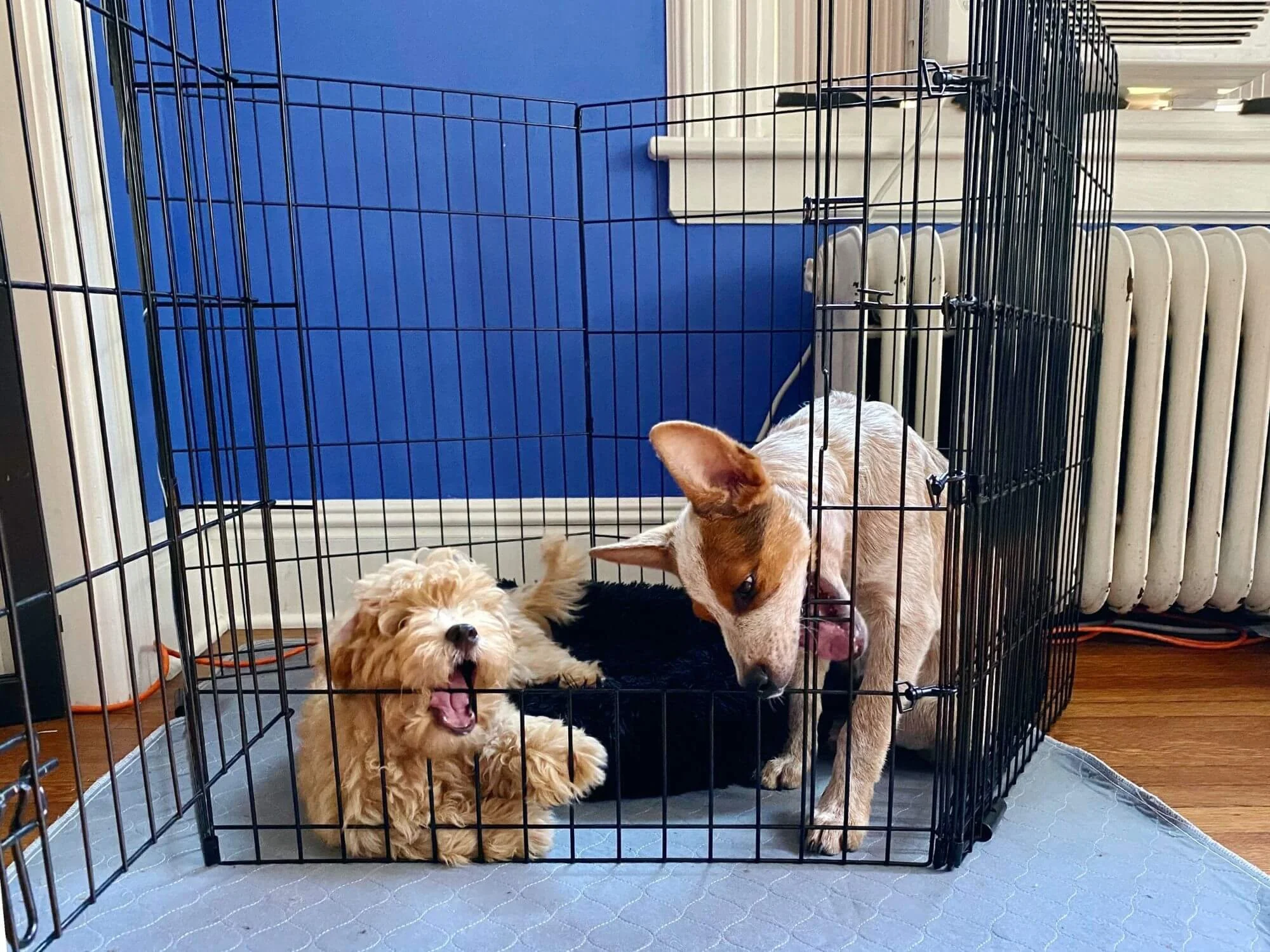
.A playpen setup allows for movement while keeping your puppy safely contained during the day.
A playpen is better suited for daytime use, especially when your puppy is awake and active.
It allows for:
Movement without full access to the home
A safe space in the same room as you
Opportunities to engage with toys or settle independently
This is often the most practical setup when you’re home but occupied with other responsibilities.
How a Crate and Playpen Work Together
Trying to rely on just one setup for every situation can make things harder.
A crate alone may feel too restrictive during the day.
A playpen alone may not support rest as easily.
Using both allows you to adjust based on what your puppy needs in that moment, whether that’s activity or downtime.
Introducing the Crate, Even if It’s Not Your Primary Setup
Even if you don’t plan to use a crate regularly, it’s still worth helping your puppy become comfortable with one.
Not because they’ll spend long stretches in it every day, but because there are situations where that familiarity makes things easier.
A crate isn’t just a training tool. It’s something your puppy may encounter in different settings, and being prepared helps reduce stress.
Overnight and potty training support
Puppies are less likely to go where they sleep, which can help create more consistency overnight while they’re still learning.Daycare and boarding environments
Many facilities use crates or similar setups to give dogs structured rest between activity. A puppy who’s already familiar with this settles more easily.Veterinary care and recovery
After procedures or injuries, restricted movement is often necessary. A puppy who already sees a crate as a safe space handles this more comfortably.
Even if your puppy spends most of their time in a playpen during the day, having a crate they’re comfortable with gives you flexibility when life doesn’t go exactly as planned.
A Safe Space, not a Punishment Space
The purpose of the crate isn’t somewhere you send your puppy when they are nor is it a space that they should spend hours and hours in.
The crate should be a space that feels calm, predictable, and separate from the activity of the home.
A well-introduced crate becomes:
a place to rest
a break from stimulation
a retreat when things feel busy
This can be especially helpful in households with a lot of movement or young children.
Setting Up the Space
Whether you’re using a crate or a playpen, how the space is set up makes a difference.
Include:
One or two toys (something to chew and something softer)
Optional bedding, depending on where your puppy is in the potty training process
Access to water, especially in a playpen
The goal is not just containment. It’s creating a space your puppy willingly enters and settle into.
Choosing What Works for Your Home
Not every household will use both setups, and that’s okay. Space, budget, and daily routine all play a role.
If you’re choosing just one, a playpen often offers more flexibility during the day.
Regardless of where you land, both a crate and a playpen are designed to support the same goal: keeping your puppy safe when you can’t actively supervise while creating structure throughout the day and evening.
When that structure is in place, life with your puppy tends to feel more manageable.
✌🏽❤️🐶
Frequently Asked Questions
-
Most puppies benefit from both. A crate supports rest and sleep, while a playpen allows for safe movement during the day when you can’t fully supervise.
-
Yes, but it’s still helpful for your puppy to become comfortable with one. Crates are commonly used in veterinary settings, daycare, and during recovery, so familiarity can make those situations easier.
-
Yes, a playpen can be used during the day when you cannot actively supervise, provided your puppy has appropriate toys, access to water, regular potty breaks, and time outside of the playpen to move freely.
-
A crate supports potty training because puppies are less likely to soil the area where they sleep. However, your puppy must still be given ample opportunities to go outside.
Continue Learning
If you’re setting up your home for a new puppy, these guides can help you build a routine that feels more manageable:
Potty Training a Puppy: A Plan for Fewer Accidents
Practical steps to create consistency and reduce accidents at homePuppy Training at Home: What to Do First
What matters most in the early weekswith your puppy
Get Support
Every puppy is different, and the day-to-day details matter.
If you want help creating a routine that fits your home, schedule, and puppy, I offer in-home training designed to make life feel calmer and more manageable from the start.